StoryMarket development
Moody Held the Senate Seat by Nearly Three Points, More Than Twice Donalds's Margin on the Same Ballot
Kalshi had the Republican Party at 87% for the Senate seat on November 2, 2026, against 65% for governor, and Moody's 238,733-vote lead is more than twice Donalds's, which means the market's ranking of the two races held.
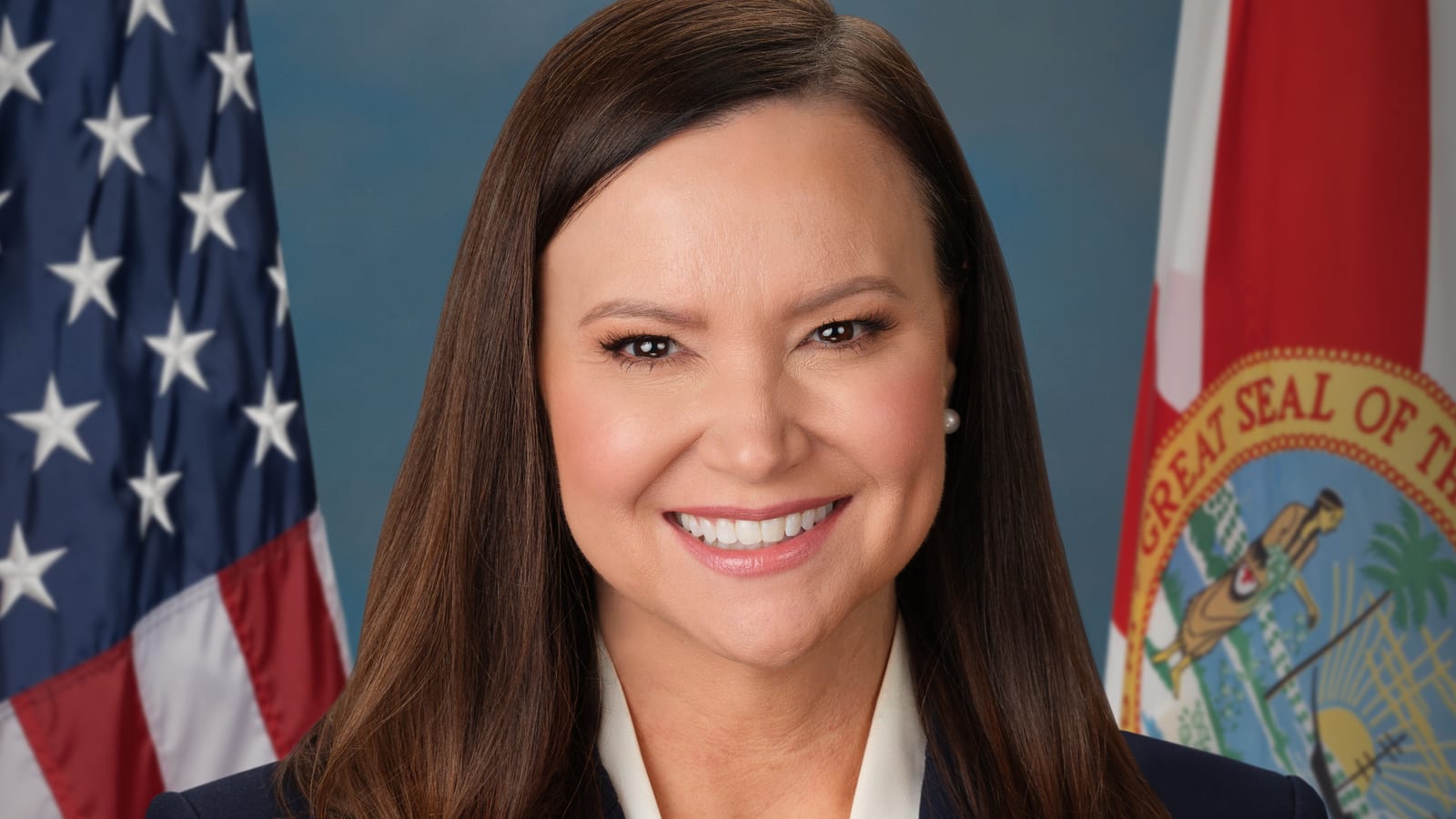
Republican Ashley Moody won Florida's U.S. Senate special election on November 3, 2026, and kept the seat by a wider margin than her party's nominee for governor managed on the same ballot: the Division of Elections' unofficial results, read at 9:59 a.m. on November 5, 2026, had Moody at 4,208,004 votes, or 50.87%, to 3,969,271, or 47.99%, for Democrat Angie Nixon. Her lead of 238,733 votes, nearly three points, is more than twice the 107,695 votes by which Byron Donalds led David Jolly for governor. CBS News projected Moody the winner on election night.
The Florida Senate race results 2026 decide who serves the remainder of Marco Rubio's Senate term, the seat Moody has held as the Class III senator from Florida, and the gap between the two statewide races is the gap the market had priced. On November 2, 2026, Kalshi had the Republican Party at 87% to win the Senate seat, 22 points above the 65% it gave the Republican Party for governor that day, which means the market treated the Senate race as the safer of the two Republican holds, and the count bore that order out.
What the unofficial count shows
Three candidates were on the ballot for the seat, as the Division's candidate list for the November 3 general election records: Moody, the Republican; Nixon, the Democrat; and Neil J. Gillespie, with no party affiliation. Gillespie took 94,538 votes, or 1.14%, so Moody's share cleared 50% by about 72,000 votes even with a third candidate on the ballot.
The count is nearly complete. The Division's county reporting page, read the same morning, shows all 67 counties with every precinct reported and their mail and early ballots completed, while 60 counties had not finished their provisional ballots and 64 had not finished the ten-day overseas mail ballots. A lead of 238,733 votes is far outside the range those ballots could move, and Florida law orders a recount only when a candidate loses by one-half of a percent or less of the votes cast for the office, under section 102.141(7) of the Florida Statutes. The result is unofficial until the state certifies it.
Set side by side with the governor's race, the Senate count shows the two Republicans ran at different strengths. Moody drew 75,670 more votes than Donalds, and Nixon drew 55,368 fewer than Jolly. The Senate race also had fewer minor candidates to split the vote: the governor's ballot listed ten tickets, the Senate ballot three.
How the Senate market priced the race going in
On November 2, 2026, Kalshi had the Republican Party at 87% for the Senate seat and Polymarket had the Democratic Party at 13%. Read plainly, that is close to a seven-in-eight chance for Moody, which means the market expected her to hold the seat and left only a modest chance for an upset, a narrower opening than it gave Jolly. The price had slipped from 91% on Polymarket on October 16, 2026, the day the site's story on Nixon's fundraising recorded a summer money advantage for Nixon that the market did not treat as enough to flip the seat.
Both venues have settled. Kalshi's own data lists its Moody contract as finalized with a Yes result and its Nixon contract as finalized No, with the settlement recorded at 9:10 p.m. Eastern time on November 3. Polymarket's data shows its Moody market resolved Yes, closing at 11:37 p.m. that night. On both venues the Republican Party now trades at 100%, which is a settled price, not a forecast, and no Senate contract is waiting on the canvass.
Where Moody ran ahead of Donalds
The county results show where the gap between the two Republicans opened. In Pinellas County, the Division's county table has Nixon ahead of Moody by 2,601 votes, while Jolly carried the county over Donalds by 18,589. In Hillsborough County, Nixon's lead over Moody was 46,442 votes, against Jolly's 59,794 over Donalds. Moody drew 7,897 more votes than Donalds in Pinellas, 7,642 more in Hillsborough and 5,319 more in Palm Beach County, the three largest gains for Moody over Donalds in any of the state's 67 counties.
In Miami-Dade and Broward, the two largest counties by votes cast, the two races were nearly identical: Moody and Donalds drew within a few hundred votes of each other in both, and the Democratic margins in those counties barely moved from one race to the other. The difference between a 1.3-point governor's race and a three-point Senate race was therefore not built in South Florida. It came largely from Pinellas, Hillsborough and Palm Beach counties, where Moody ran well ahead of Donalds while Nixon ran behind Jolly.
What the two Florida races say together
The governor and Senate markets were priced off the same electorate, so the gap between them is the interesting number. On the eve of the vote the market made the Republican Party a 65% favorite for governor and an 87% favorite for the Senate seat, and the results came in in that order: about 1.3 points for Donalds and nearly three for Moody. A market that priced both races the same would have had no way to explain that split; the one that existed did.
The polls point the same way but overshot both margins. 270toWin's list of the eight public Senate polls released between October 27 and November 2, 2026 has Moody ahead in all of them, by four to nine points, with an average of 50.8% to 44.5%. Against that average of about six points, a result of nearly three is a miss of more than three points, close to the miss in the governor's race, where the final polling average had Donalds ahead by about five. Both statewide polling averages overstated the Republican margin by a similar amount, and the market prices, which had both Republicans ahead but neither as a certainty, left room for both narrower results.
The case against reading too much into the order
The strongest case against this read is that the order of the two races needed no market to predict. Moody was the sitting senator running for a seat she already held, while the governor's race was open after DeSantis reached his term limit; a reader who holds this view would say any observer could have ranked the Senate seat as the safer Republican hold, and that a 22-point gap in price is not a forecast of a 1.6-point gap in margin. That is fair. What the market added was a measure of how much safer, and on the count read November 5 the measure looks reasonable rather than exact.
What happens next
The remaining steps come from the Division's reporting timeline for the 2026 general election.
• Thursday, November 5, 2026, 5 p.m.: last chance for voters to fix a signature problem on a mail ballot or back up a provisional ballot.
• Saturday, November 7, noon: first unofficial county returns go to the Department of State.
• Monday, November 16, noon: county official returns, with the ten-day overseas ballots counted, are due.
• Tuesday, November 17, 8 a.m.: certification of the official returns by the Elections Canvassing Commission.
The Florida Senate odds page keeps the settled board, the governor's result is in the story on Donalds's narrow win, and every Florida contest is on the elections page.
Questions readers are asking
Who won the Florida Senate race in 2026?
Republican Ashley Moody, projected the winner by CBS News on November 3, 2026. The Division of Elections unofficial results read November 5 had her at 4,208,004 votes, or 50.87%, to 3,969,271, or 47.99%, for Democrat Angie Nixon.
What did prediction markets say before the Florida Senate election?
As of November 2, 2026, Kalshi had the Republican Party at 87% to win the Senate seat and Polymarket had the Democratic Party at 13%. The same day Kalshi had the Republican Party at 65% for governor.
How did Moody do compared with Donalds?
Moody led by 238,733 votes, nearly three points, and Donalds led for governor by 107,695 votes, about 1.3 points, in the unofficial count read November 5, 2026. Moody drew 75,670 more votes than Donalds.
What seat did Moody win in the special election?
The special election fills the remainder of Marco Rubio's Senate term, Florida's Class III seat, which Moody holds now. Florida's other senator is Rick Scott, in the Class I seat.
When will the Florida Senate results be certified?
The Elections Canvassing Commission certifies the official returns by 8 a.m. on November 17, 2026, after county official returns are due at noon on November 16.