StoryLocal news
Florida Has No Order Forcing Exchanges to Block Its Residents as the CFTC Moves Against Geographic Blocks
The CFTC gave exchanges 30 days on November 5, 2026 to end state-by-state blocks or explain why they cannot, which in Florida meets no court order, regulator letter or Attorney General action requiring one.
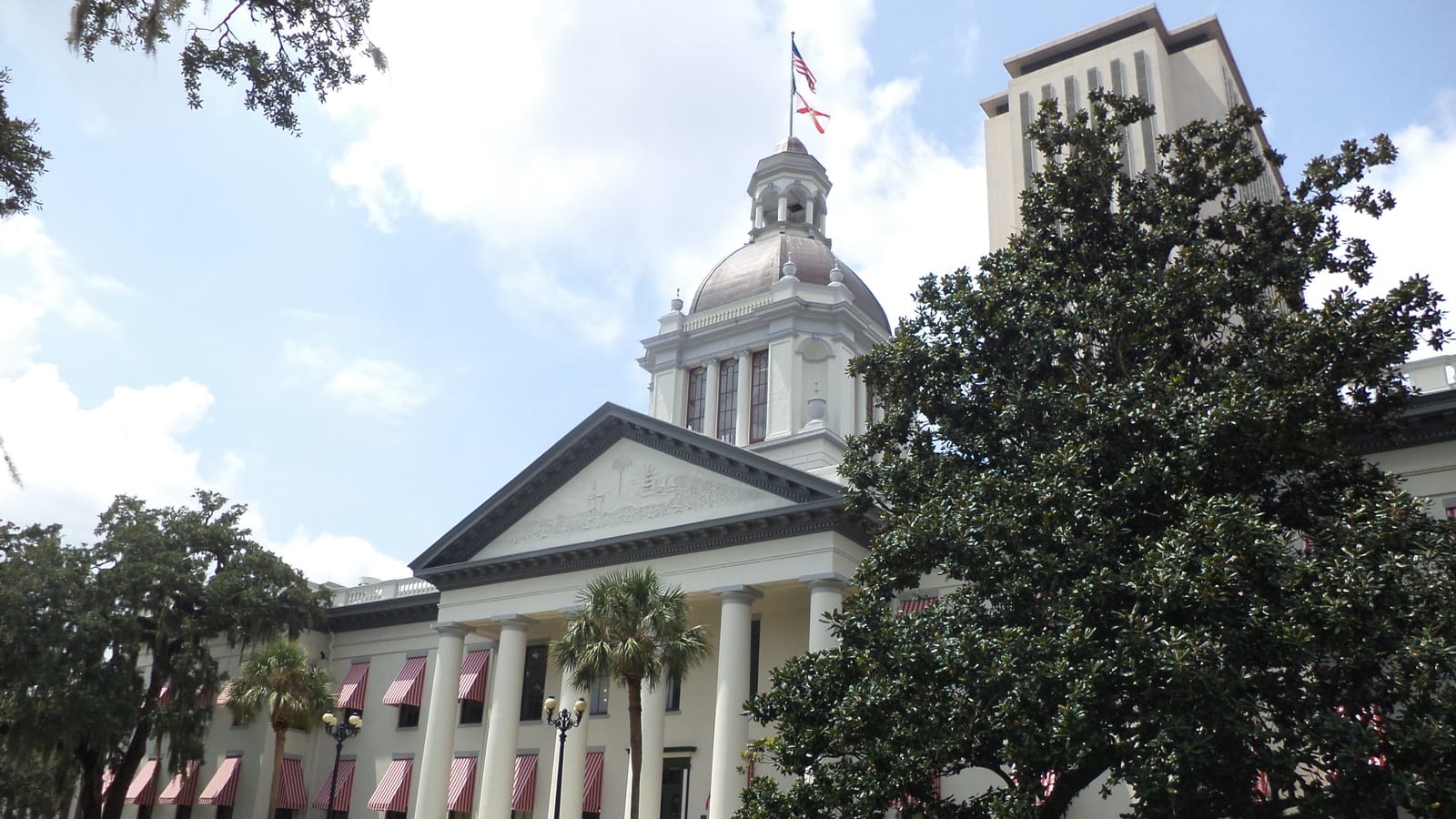
The CFTC's push against geographic restrictions reaches Florida as a state where no court or regulator has ordered a prediction-market exchange to keep Floridians out. As of November 6, 2026, no Florida court order, Florida Gaming Control Commission order or Attorney General action requiring Kalshi, Polymarket or any other exchange to block users in Florida was located, and Robinhood's own list of the states where its customers cannot trade sports event contracts names Maryland, Michigan, Nevada, Ohio and Utah. Florida is not on it.
That matters because the federal guidance issued a day earlier is aimed at blocks like those. On November 5, 2026 the Commodity Futures Trading Commission announced an interpretation of its impartial-access rule, Commission Regulation 38.151(b), in Release 9323-26: exchanges registered as designated contract markets "must cease domestic geographic restrictions that violate the Impartial Access Requirements within 30 days," or explain to the agency's Division of Market Oversight why they cannot, and must make sure that the brokers and other intermediaries routing customers to them are not imposing such restrictions either. In Florida, where no order of that kind was located, there is no state block for the 30-day clock to run against.
The six-page interpretation says that "geographic access restrictions are inconsistent with the CEA and Commission rules and regulations," and that the Commodity Exchange Act and its rules "generally do not permit" an exchange to limit access "based on the location of an otherwise eligible market participant within the United States." "Derivatives markets must operate on a uniform basis at a national scale in order to achieve the purposes set out in the Commodity Exchange Act," Chairman Michael S. Selig said in the release. The document is marked "subject to pre-publication technical corrections" and takes effect when it is published in the Federal Register, which had not happened by November 6, and the release says the Commission "will consider the facts and circumstances of any particular case in connection with potential Commission action."
Why the guidance meets an open field in Florida
Florida's gambling regulator had not addressed it on its news page. The Florida Gaming Control Commission's news page listed its newest release as an October 26, 2026 announcement of a regulatory award, and no release title in its 2026 list mentions prediction markets or event contracts. The Attorney General's newsroom listed nothing newer than two October 30, 2026 releases, and the office's own site search returned no results for "Kalshi," "Polymarket" or "prediction market." The Governor's press page listed nothing newer than October 30. None of the three had commented on the interpretation on its press page as of 1:13 p.m. Eastern on November 6, 2026.
The one Florida case located over sports event contracts is a private one. Keohohou v. North American Derivatives Exchange, Inc., No. 1:26-cv-20996, is a class action filed in the U.S. District Court for the Southern District of Florida on February 13, 2026. Its plaintiffs allege that the sports event contracts Crypto.com began offering in December 2024 are "nothing more than illegal sports gambling by another name." Those are allegations, not findings, and the State of Florida is not a party. The federal docket archive lists an order dated November 1, 2026, Doc. 69, whose title lists orders on the defendants' motions to compel arbitration, to dismiss and to stay, and a docket event of the same date titled "Case Stayed." The order's text could not be read, so what it decided is not reported here. Nothing in that docket's titles describes an order to block Florida users.
Two federal archive searches of Florida's three districts and the Eleventh Circuit, run on November 6, 2026, found no case with Kalshi or Polymarket as a party: the Kalshi search returned Keohohou and cases whose text mentions the name, and the Polymarket search returned nothing. Florida's legal status page sets out that record venue by venue and says what it does not establish.
Kalshi describes itself as "regulated as a Designated Contract Market (DCM)" by the CFTC, the category the guidance addresses. Robinhood Derivatives, which describes itself as a registered futures commission merchant whose event contracts are offered through KalshiEX LLC and other exchanges, is the kind of intermediary the guidance asks exchanges to police, and its state list is that firm's own record of where it restricts customers. Florida is not on it.
The Seminole compact and the tribal objection
Florida's tribal angle runs through the Seminole Tribe of Florida, not through any order. Section 285.710 of the Florida Statutes says the gaming compact "executed by the Governor and the Tribe on April 23, 2021, as amended on May 17, 2021, is ratified and approved." The Gaming Control Commission's September 14, 2026 release says that "The state of Florida legalized online sports betting through the Seminole Tribe's Hard Rock Bet platform in 2023."
The Tribe has taken a side in the national case. The Seminole Tribe of Florida is listed among the 145 Indian tribes and tribal organizations on an amicus brief filed October 8, 2026 at the U.S. Supreme Court in Flaherty v. KalshiEX, LLC, No. 26-299, supporting New Jersey's petition. Of Kalshi and similar platforms, the brief says: "With the backing of the Commodity Futures Trading Commission (CFTC), they offer sports betting on Indian lands, against Tribes' wishes and in violation of IGRA's comprehensive regulatory scheme," IGRA being the Indian Gaming Regulatory Act. That is the amici's argument; the Court has not ruled on the petition. The State of Florida, by contrast, is not among the signatories of the brief that Ohio, 38 other states and the District of Columbia filed on October 7, 2026 in the same case, and the docket does not say why.
The November 5 interpretation does not mention tribes, Tribal lands, any court or any state by name. The tribal objection came from Washington instead. Sen. Adam Schiff, quoting Selig's post, said on X that "Sports prediction markets are sports bets" and that "By effectively requiring prediction markets to offer contracts in all 50 states, even on Tribal lands, the CFTC is once again violating state law and Tribal sovereignty." He called the move "the CFTC's most egregious attempt yet to undermine state law, the Tribes, and now, the courts." Selig had written on X that "Geographic access restrictions undermine the national uniformity and consistency that the Act is intended to facilitate."
The kinds of markets the guidance describes, on Florida's boards
The interpretation's examples read like a list of Florida boards. On sports it says: "Insomuch as particular contracts attract disproportionately regional interest (e.g., whether a home team advances to its playoffs), excluding such regions could decrease the contracts' overall liquidity." That is the shape of the Florida College Football Playoff market page, which tracks whether Florida's college programs reach the playoff field, and which this site last covered when Miami took the top spot in the first CFP rankings.
On elections it says that "Some statewide and more localized election markets may generate the most volume and/or knowledge from residents of the State or locality where the election takes place," and that restricting a state's residents "could severely undercut volume and/or the information-discovery function of any market concerning an election in that State." The Florida governor market page is that kind of contract, a statewide race, and this site's report on the governor race's unofficial count followed its board after the vote. The interpretation also cites traders in "a region prone to extreme weather events" and in energy-producing regions. None of these passages names a price, and nothing in the guidance says how any Florida board will trade.
What the guidance does not do
The interpretation is the Commission's view of its own rules. It is federal guidance, not a statute and not a court judgment, and it does not by itself overturn a state law or a court order anywhere. Whether federal commodities law displaces a state's gambling law is a question courts are deciding, including at the Supreme Court in No. 26-299, and this site takes no side on it. As of November 6, 2026, nothing in Florida's record turns on the guidance, because no Florida order exists for it to collide with.
What comes next
Thirty days from the November 5 release falls on December 5, 2026, the point by which exchanges must end domestic geographic restrictions or file their explanations with the Division of Market Oversight, and by which they "should ensure that intermediaries accessing their markets are not impeding" the rule. Federal Register publication, which sets the interpretation's effective date, is still to come. Kalshi's response to New Jersey's petition in No. 26-299 is due December 7, 2026, after the Court extended the deadline on October 30. In Miami, the text of the November 1 order in Keohohou remains the open question on the one Florida case. Florida's legal status page is reviewed again by November 20, 2026, and sooner after any Florida action naming a venue.
Questions readers are asking
What did the CFTC say about geographic restrictions on prediction markets?
On November 5, 2026 the CFTC issued an interpretation of Regulation 38.151(b) stating that geographic access restrictions are inconsistent with the Commodity Exchange Act, and gave exchanges 30 days to end domestic geographic restrictions or explain to its Division of Market Oversight why they cannot.
Is there an order requiring Kalshi or Polymarket to block Florida users?
No such order was located as of November 6, 2026: no Florida court order, Gaming Control Commission order or Attorney General action names either venue, and Robinhood's list of states where customers cannot trade sports event contracts names Maryland, Michigan, Nevada, Ohio and Utah, not Florida.
What does the Seminole Tribe have to do with prediction markets in Florida?
Section 285.710 of the Florida Statutes ratifies the Seminole compact executed April 23, 2021, and the Seminole Tribe of Florida is listed on an October 8, 2026 brief of 145 tribes and tribal organizations at the Supreme Court in No. 26-299 arguing that prediction markets offer sports betting on Indian lands in violation of federal Indian gaming law.
Does the CFTC guidance override Florida law or a court order?
Not by itself. The interpretation is the Commission's view of its own rules, takes effect on Federal Register publication, and does not overturn a state law or a court order; whether federal law displaces state gambling law is for courts, including the Supreme Court in No. 26-299.
When does the CFTC's 30-day window end?
Thirty days from the November 5, 2026 release falls on December 5, 2026. Kalshi's response to New Jersey's Supreme Court petition in No. 26-299 is due December 7, 2026.